Leeds FC isn’t just a football club—it’s a legacy etched in passion, pride, and unforgettable moments. From roaring crowds at Elland Road to dramatic promotions and heartbreaking relegations, the journey of Leeds FC is nothing short of cinematic. Dive in and discover what makes this club truly legendary.
1. The Origins and Evolution of Leeds FC

Leeds FC, now officially known as Leeds United Football Club, has roots that stretch back over a century. Though the current club was formed in 1919, its story begins much earlier, shaped by the footballing culture of Yorkshire and the ambitions of local entrepreneurs and fans alike.
Founding in 1919: A New Era Begins
Leeds United was established on October 17, 1919, following the disbandment of Leeds City FC, which was expelled from the Football League due to financial irregularities during World War I. The Football League saw potential in the city of Leeds and allowed a new club to take its place.
- The new club was named Leeds United to symbolize unity across the city.
- They were admitted into the Football League’s Second Division.
- Local businessman Arthur Fairclough became the first manager.
The formation was more than just administrative—it was a rebirth of football pride in a growing industrial city.
Early Struggles and First Success
The early years were challenging. Leeds FC spent over a decade in the Second Division before earning promotion to the First Division in 1924 under the management of Arthur Fairclough. However, their stay was short-lived, and they were relegated in 1926.
It wasn’t until the 1950s that Leeds FC began to show signs of becoming a force. Under manager Raich Carter, the club won the Second Division title in 1956, marking a turning point in their trajectory.
“Leeds United was born from scandal but built on resilience.” — Football historian James Walsh
2. The Don Revie Era: Glory Days of Leeds FC
No chapter in Leeds FC’s history is more iconic than the Don Revie era. From 1961 to 1974, Revie transformed the club from underachievers into one of England’s most dominant and controversial teams.
Revie’s Tactical Revolution
When Don Revie took over as manager in 1961, Leeds FC was languishing in the Second Division. He introduced a disciplined, fitness-focused approach, emphasizing organization and mental toughness.
- Revie implemented rigorous training regimes, including pre-season fitness camps.
- He developed the “Revie Plan,” a tactical system based on zonal marking and positional discipline.
- He nurtured young talents like Billy Bremner, Norman Hunter, and Jack Charlton.
By 1964, Leeds FC had earned promotion to the First Division, setting the stage for a golden era.
Domestic and European Triumphs
Throughout the late 1960s and early 1970s, Leeds FC became a powerhouse. They won:
- The First Division title in 1969 and 1974
- The FA Cup in 1972
- The League Cup in 1968
- The Inter-Cities Fairs Cup (precursor to the UEFA Cup) in 1968 and 1971
They reached the European Cup final in 1975 under new manager Brian Clough—though his tenure was famously short-lived.
Their aggressive, no-nonsense style earned them both admiration and criticism. Dubbed “Dirty Leeds” by rivals, the team was feared for their physicality and relentless pressing.
3. Iconic Players Who Defined Leeds FC
Leeds FC’s legacy is carried by legends whose names echo through Elland Road. These players didn’t just wear the white shirt—they embodied its spirit.
Billy Bremner: The Heart of the Team
Captain Billy Bremner was the fiery engine of Revie’s Leeds FC. Standing at just 5’4”, Bremner played with unmatched intensity and leadership.
- He made over 770 appearances for the club.
- Known for his tackling, passing, and never-say-die attitude.
- Inducted into the English Football Hall of Fame in 2002.
“If you weren’t scared of Bremner, you weren’t alive.” — Opposing player, 1970s
Lucas Radebe: The Chief
In the 1990s, South African defender Lucas Radebe became a symbol of resilience and loyalty. Signed in 1994 alongside Phil Masinga, Radebe initially struggled but grew into one of the club’s most beloved figures.
- Played 262 games for Leeds FC.
- Captained the team during their Champions League semi-final run in 2001.
- Admired for his leadership and community work in Leeds.
Nelson Mandela once said, “This is my hero,” when meeting Radebe—highlighting his global impact.
Eric Cantona: The Fledgling Star
Before becoming a Manchester United icon, Eric Cantona shone at Leeds FC. Signed in 1992, he was instrumental in their First Division title win that season—the last before the Premier League era.
- Scored crucial goals with flair and confidence.
- His kung-fu kick incident in 1995 led to his sale to United, a move that haunted Leeds fans.
- Remembered as a genius who could change games in an instant.
His departure marked the beginning of a turbulent period for Leeds FC.
4. Elland Road: The Sacred Ground of Leeds FC
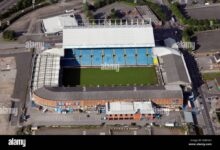
Elland Road isn’t just a stadium—it’s a fortress, a cathedral of football, and the beating heart of Leeds FC. Located in the Beeston area of Leeds, it has hosted countless historic moments since 1897.
History and Architecture
Originally home to Leeds Rugby Club, Elland Road was taken over by Leeds FC in 1919. Over the decades, it has undergone numerous renovations.
- Current capacity: approximately 37,792 (all-seater).
- Four main stands: West Stand, East Stand, South Stand, and the iconic North Stand (also known as the Kop).
- Hosted international matches, including England youth games and Women’s World Cup fixtures in 2022.
The North Stand, in particular, is famed for its atmosphere, with fans creating a wall of sound that intimidates visiting teams.
The Atmosphere on Match Day
Attending a Leeds FC match at Elland Road is a sensory experience. The roar of “Marching On Together” echoes through the stands, uniting fans in song and spirit.
- The chant “We Are Leeds” is a staple of home games.
- Fans often display massive tifos and flags, especially during derby matches against rivals like Manchester United or Millwall.
- The stadium’s proximity to the pitch enhances the intensity and connection between players and supporters.
Many visiting players and managers have described Elland Road as one of the most intimidating grounds in England.
5. Leeds FC in the Premier League: Rise, Fall, and Redemption
The Premier League era has been a rollercoaster for Leeds FC. From European contenders to financial collapse and eventual revival, their journey reflects both ambition and cautionary lessons.
Golden Years: Champions League Semi-Finalists
In the early 2000s, under managers David O’Leary and later Terry Venables, Leeds FC returned to elite football. They qualified for the UEFA Champions League four times between 1999 and 2003.
- Reached the Champions League semi-finals in 2001, losing to Valencia.
- Played against giants like AC Milan, Lazio, and Deportivo La Coruña.
- Developed young talents like Harry Kewell, Mark Viduka, and Alan Smith.
However, their success was built on heavy borrowing and player sales, which would later backfire.
Financial Collapse and Relegation
By 2004, Leeds FC faced a financial crisis. Years of overspending on transfers and wages, coupled with failure to qualify for European competitions, led to massive debts.
- The club was relegated from the Premier League in 2004.
- Entered administration in 2007, resulting in a 10-point deduction.
- Were demoted to League One (third tier) for the first time in their history.
It was a humbling fall for a club that had recently competed at the highest level.
Marcelo Bielsa and the Road Back
The turning point came in 2018 with the appointment of Argentine manager Marcelo Bielsa. Known for his intense, attacking style, Bielsa instilled a new philosophy.
- Leeds FC won the EFL Championship in 2020, ending a 16-year absence from the Premier League.
- Played an aggressive, high-pressing game dubbed “Bielsa-ball.”
- Players like Patrick Bamford, Kalvin Phillips, and Raphinha became stars.
Bielsa’s impact went beyond results—he restored pride and identity to Leeds FC.
6. Rivalries That Define Leeds FC
Rivalries are the lifeblood of football culture, and Leeds FC has some of the most intense in English football. These matches are more than games—they’re battles of identity and history.
Manchester United: The A6 Motorway Derby
The rivalry with Manchester United is one of the most heated in English football. Though not geographically close, the competition intensified during the Revie and Ferguson eras.
- Leeds FC won the First Division in 1969, breaking United’s dominance.
- Eric Cantona’s transfer to United in 1995 deepened the animosity.
- Fans often clash, and matches are heavily policed.
Despite infrequent meetings since Leeds’ relegation, the rivalry remains potent.
Derby County: The East Midlands Feud
The rivalry with Derby County dates back to the 1970s, when both clubs competed for titles. It turned toxic in the 2007 Championship playoff final, which Derby won 1-0.
- Derby fans taunted Leeds with chants about their financial troubles.
- Leeds supporters view Derby as a bitter enemy, despite geographical distance.
- The fixture is often marked by high tension and yellow cards.
This rivalry is less about proximity and more about historical conflict and pride.
Local Rivalries: Yorkshire Pride
Within Yorkshire, Leeds FC has competitive ties with clubs like Bradford City and Huddersfield Town.
- Matches against Huddersfield are known as the West Yorkshire derby.
- Bradford City, though historically less successful, represents a local challenge.
- These games often feature passionate fan displays and tight, physical contests.
While not as fierce as the Manchester United clash, these derbies matter deeply to the local community.
7. The Future of Leeds FC: Challenges and Ambitions
As Leeds FC navigates the modern football landscape, the club faces both opportunities and obstacles. Sustainability, youth development, and global branding are key to their future.
Ownership and Financial Stability
After years of instability, Leeds FC is now owned by 49ers Enterprises, a group linked to the NFL’s San Francisco 49ers. This partnership has brought financial discipline.
- Investment in infrastructure, including the training ground at Thorp Arch.
- Focus on data analytics and sports science.
- Commitment to avoiding the financial pitfalls of the early 2000s.
The ownership model emphasizes long-term growth over short-term glory.
Youth Academy and Player Development
Leeds FC has a proud tradition of nurturing talent. The club’s academy, based at Thorp Arch, has produced stars like Harry Kewell, Fikayo Tomori, and Sam Greenwood.
- The academy is Category One ranked under the Elite Player Performance Plan (EPPP).
- Focus on technical skills, tactical intelligence, and mental resilience.
- Partnerships with local schools and grassroots clubs to scout talent early.
Investing in youth is seen as essential to sustainable success.
Global Expansion and Fan Engagement
Leeds FC is expanding its global footprint. With official fan clubs in over 50 countries, the club is building an international brand.
- Active on social media with millions of followers.
- Partnerships with global brands like Kappa and Trivento Wines.
- Hosting international friendlies and youth tournaments.
The goal is to transform Leeds FC from a regional powerhouse into a global football institution.
When was Leeds FC founded?
Leeds FC, officially Leeds United, was founded on October 17, 1919, following the dissolution of Leeds City FC. The club was admitted to the Football League Second Division and has since become one of England’s most storied football institutions.
Why is Leeds FC called ‘Dirty Leeds’?
The nickname ‘Dirty Leeds’ emerged in the 1970s during the Don Revie era. It was used by rivals and media to describe the team’s aggressive, physical playing style. While controversial, the label also reflected their relentless competitiveness and tactical discipline.
Has Leeds FC ever won the Premier League?
Leeds FC won the top-flight league title twice—in 1969 and 1974—before the formation of the Premier League in 1992. Their last major trophy was the First Division title in 1992, which is recognized as a league championship but not a Premier League title.
Who is the most famous Leeds FC player?
While opinions vary, Billy Bremner is often regarded as the most iconic Leeds FC player due to his leadership, longevity, and role in the club’s golden era. Others like Lucas Radebe and Eric Cantona also hold legendary status among fans.
What is Leeds FC’s home stadium?
Leeds FC plays its home matches at Elland Road, located in the Beeston area of Leeds, West Yorkshire. The stadium has a capacity of around 37,792 and has been the club’s home since 1919.
Leeds FC is more than a football club—it’s a symbol of resilience, passion, and community. From its humble beginnings in 1919 to the glory of the Revie era, the heartbreak of financial collapse, and the triumphant return under Marcelo Bielsa, the club’s journey is a testament to the enduring power of sport. With a rich history, iconic players, and a fiercely loyal fanbase, Leeds FC continues to march forward, united by the anthem “Marching On Together.” The future holds challenges, but also immense promise for one of England’s most storied clubs.
Further Reading:
